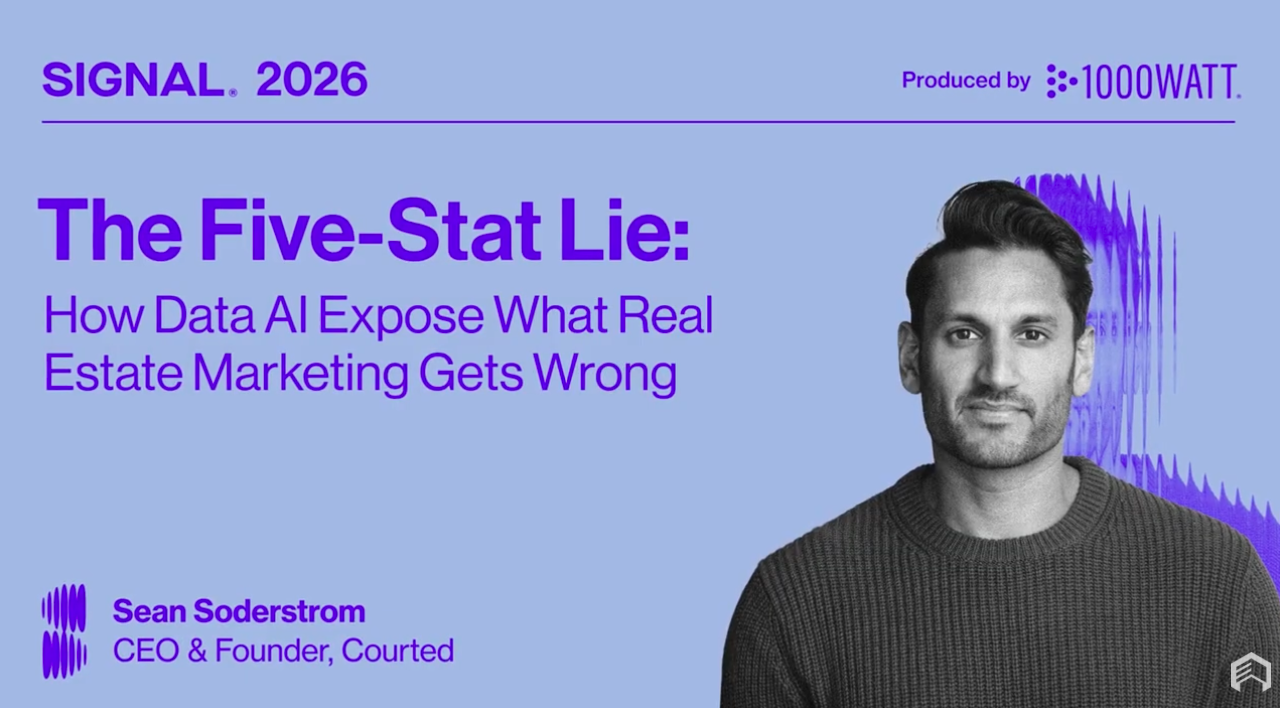
Real estate consumers have never had more information.
Buyers can browse listings, compare neighborhoods, review price histories, estimate home values, and even ask AI tools to explain what's happening in the housing market before they ever speak with an agent. Sellers can monitor comparable sales, track local trends, and form their own opinions with just a few clicks.
That fundamentally changed the role of the real estate professional.
If consumers already have access to the data, what value does the agent provide?
The answer isn't more information, it's better insight.
The future of real estate marketing isn't about producing more content or publishing another monthly market report. It's about helping clients understand what the data means and giving them confidence in the decisions they need to make.
Traditional Market Reports No Longer Differentiate Agents
For years, brokerages have relied on monthly market updates filled with familiar statistics:
- Median sales price
- Days on market
- Inventory levels
- Sale-to-list price ratio
- Year-over-year appreciation
These reports aren't wrong. They're just no longer enough.
They explain what happened in the market, but they rarely answer the questions clients actually care about.
Questions like:
- Should I buy now or wait?
- Are buyers gaining negotiating leverage?
- Is inventory increasing because more homes are coming to market—or because homes are taking longer to sell?
- Which neighborhoods are becoming more competitive?
- How is my specific price range performing?
Those aren't reporting questions. They're decision questions. And answering them is where great agents create value.
Consumers Need Interpretation, Not More Data
Every client experiences the housing market differently.
A first-time buyer, luxury seller, investor, downsizing homeowner, and growing family are all looking at the market through different lenses. Their goals, timelines, budgets, and opportunities aren't the same.
Yet many brokerages still send everyone the exact same market report.
The next generation of real estate marketing will be personalized.
Instead of generic statistics, clients will receive insights tailored to their price range, neighborhood, property type, and buying or selling goals.
Imagine receiving updates like:
"Inventory in your preferred price range has increased over the past 60 days, creating more negotiating opportunities."
Or:
"Price reductions are happening earlier than they did last year, suggesting buyers may have additional leverage."
That's more than market information.
It's meaningful guidance.
When brokerages deliver insight instead of statistics, they become trusted advisors instead of another source of market content.
The Best Agents Help Clients Make Better Decisions
The most valuable moment in a client relationship isn't when an agent sends a newsletter.
It's when a client asks:
"What would you do if you were in my position?"
Today's buyers and sellers don't simply want more information.
They want judgment.
A buyer asking whether this is the right time to purchase isn't looking for median home prices. They're looking for someone who can explain inventory trends, competition, seasonality, financing conditions, and negotiation opportunities, and help them understand the trade-offs.
Sometimes the best advice is to buy today. Sometimes it's to wait. Sometimes it's to expand the search into another neighborhood or adjust expectations around price.
That's what trusted advisors do. And that's what clients remember. Trust isn't built by repeating market statistics. It's built by helping people make better decisions.
AI Makes Better Advice Possible
Historically, answering complex market questions required hours of manual research.
Agents needed to pull MLS reports, analyze comparable sales, compare neighborhoods, identify trends, and translate all of that information into something clients could understand.
Most simply don't have time to do that consistently.
AI changes that.
Instead of spending hours gathering information, agents can ask sophisticated questions and receive actionable insights in seconds.
Questions like:
- Are price reductions happening earlier than last year?
- Is inventory increasing because of new listings or because homes are staying on the market longer?
- Which neighborhoods are outperforming similar markets?
- What price ranges are seeing the most competition?
AI can quickly identify patterns and summarize market behavior.
The agent still provides what technology cannot: context, experience, empathy, and judgment.
That's why AI won't replace great agents.
It will make great agents even more valuable.
The Future of Real Estate Marketing
Consumers no longer need agents to access information.
They need professionals who can interpret complexity.
The brokerages that stand out over the next decade won't simply produce more content.
They'll equip their agents with better intelligence.
They'll personalize market insights.
They'll help agents answer difficult questions with confidence.
And they'll build stronger relationships by delivering advice that's timely, relevant, and actionable.
In today's market, authority doesn't come from having the data.
It comes from making sense of it.
How Courted Helps
Courted helps real estate brokerages turn MLS data into actionable market intelligence using AI.
Our platform enables brokerages and agents to better understand local markets, identify emerging trends, monitor competitors, recruit more effectively, strengthen retention efforts, and deliver richer insights to clients.
Instead of relying on generic market reports, brokerages can empower their agents with the intelligence they need to have smarter conversations, provide more strategic guidance, and build lasting trust.
As consumers become more informed, the brokerages that succeed won't be the ones producing more content.
They'll be the ones delivering better insight.
