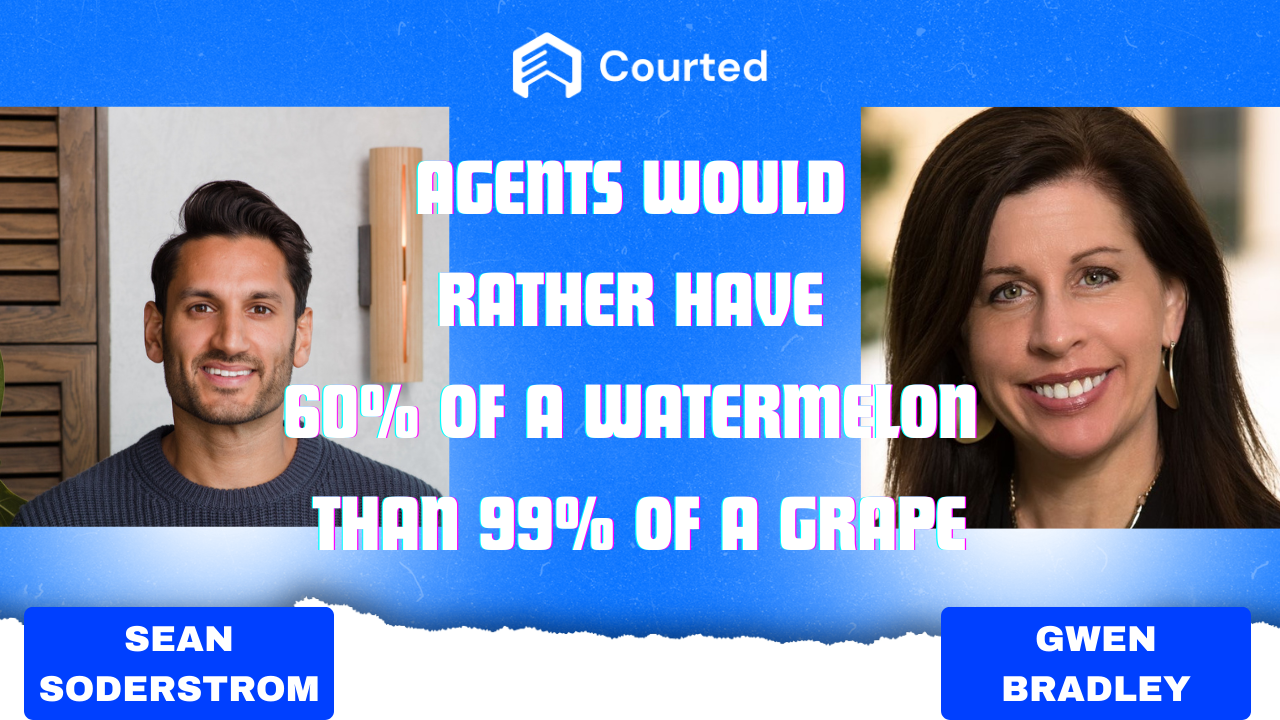
“60% of a Watermelon vs. 99% of a Grape” – The Real Driver of Agent Retention
“People would rather have 60% of a watermelon than 99% of a grape.”
That’s how Gwen Bradley, Vice President of Career Development at Howard Hanna Real Estate Services, described her company’s philosophy on agent value.It’s a simple analogy. But it explains why Howard Hanna achieved the strongest retention performance among the Top 25 brokerages in the United States.In a market defined by aggressive recruiting, richer commission splits, and increasingly creative compensation offers, Howard Hanna quietly ranked #1 in retention among mega brokerages — losing just 5% of its sales volume in 2025.The takeaway is clear:Retention is not primarily about splits.It’s about growth.
The Industry’s Obsession With Splits
Over the past several years, brokerage competition has intensified. The Top 100 brands collectively recruited 12% of their volume in 2025 — while losing 10%.That means enormous gross movement… and minimal net gain.In that environment, recruiting conversations often center around:
- Higher commission splits
- Signing bonuses
- Caps and fee structures
- Revenue share mechanics
But agents ultimately care about a more fundamental question:
Will I close more transactions here?
If the answer is yes, the split becomes secondary.
Why Productivity Beats Compensation
The watermelon analogy reframes the economics of brokerage decisions:
- 99% of a small book of business is still small.
- 60% of a significantly larger business is transformative.
Agents don’t build long-term wealth from maximizing splits on stagnant production. They build wealth by increasing production — more listings, more buyers, more transactions.Brokerages that win on retention tend to:
- Invest heavily in coaching and career development
- Provide meaningful operational and marketing support
- Create systems that help agents generate and convert opportunities
- Foster cultures of collaboration and long-term growth
When agents see tangible increases in production, loyalty follows.
What Howard Hanna’s Retention Performance Signals
Howard Hanna’s performance is not an accident.
As one of the largest privately held brokerages in the U.S., its model emphasizes:
- Regional dominance and market depth
- Structured career development pathways
- Relationship-driven leadership
- Productivity-focused support infrastructure
In a recruiting environment where agents are frequently pitched incremental economic advantages, Howard Hanna demonstrates that
support and scale can matter more than marginal split differences.
This aligns with broader data trends:B
rokerages that help agents expand their “watermelon” — total production — retain more volume over time than those competing purely on economics.
What This Means for 2026 and Beyond
As we look ahead, brokerage competition will continue to intensify. Commission compression, agent mobility, and evolving consumer expectations will challenge traditional models.The question every brokerage leader should ask:
Are we competing on splits, or are we competing on growth?
The data increasingly suggests that retention is the true moat in modern brokerage competition.And retention is earned through productivity.If you’re a brokerage leader looking to understand your recruiting, retention, and productivity performance at a granular, data-driven level, we’d love to show you what’s possible.
Get started here:

